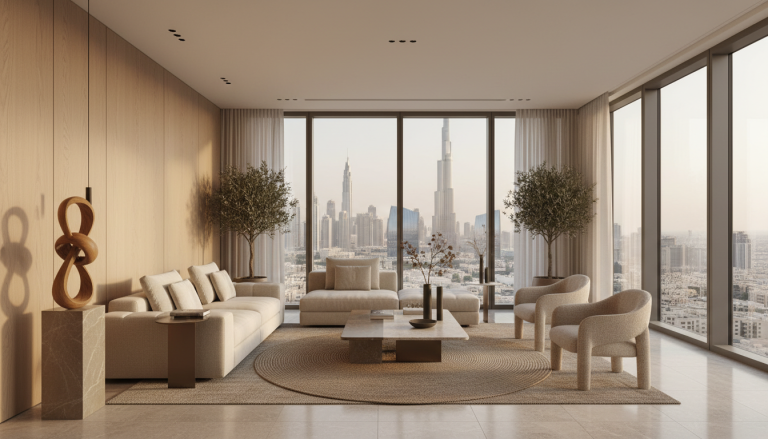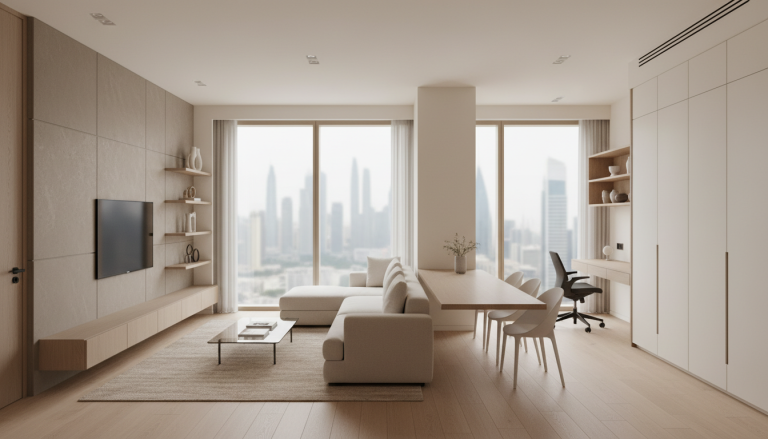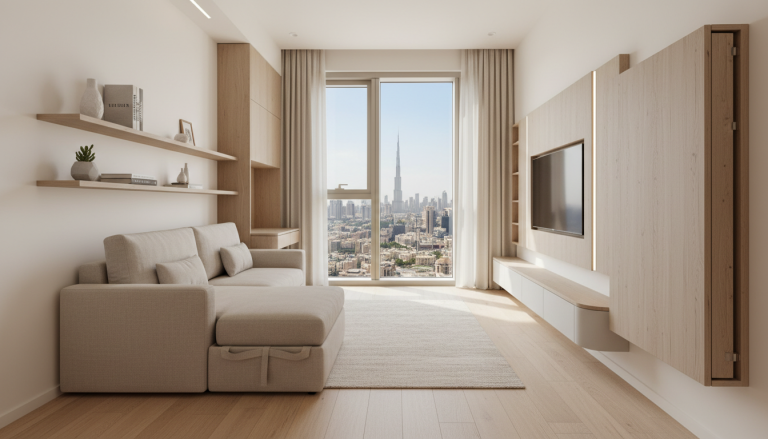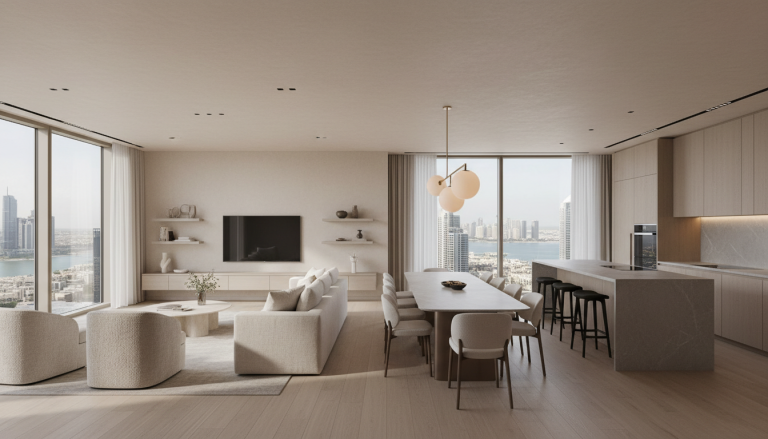
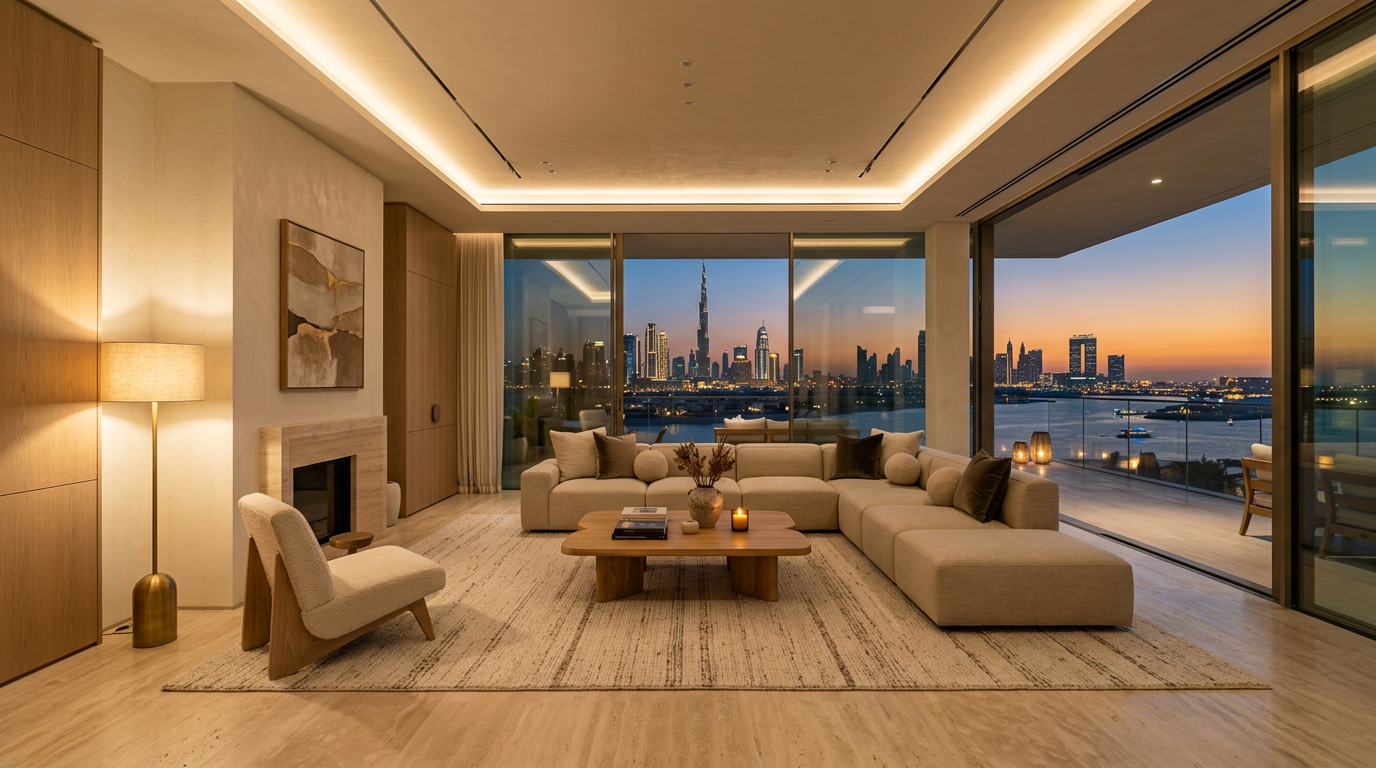
You walk into a beautifully designed home in Lahore. The marble is flawless, the lighting is soft, the furniture feels custom and intentional. Everything looks right.
But then you pause.
Something feels slightly off, not in how it looks, but in how it responds to you.
Let us be honest, this is something many homeowners in Lahore experience but rarely put into words. A home can be visually stunning and still feel disconnected from daily life.
That is exactly where smart home technology is quietly transforming interior design in Lahore.
From DHA and Bahria Town villas to Gulberg apartments and MM Alam Road office spaces, homes are no longer just designed for appearance. They are being designed for behaviour.
Spaces now think. Adjust. Respond.
And that changes everything.
The shift happening in Lahore luxury interiors
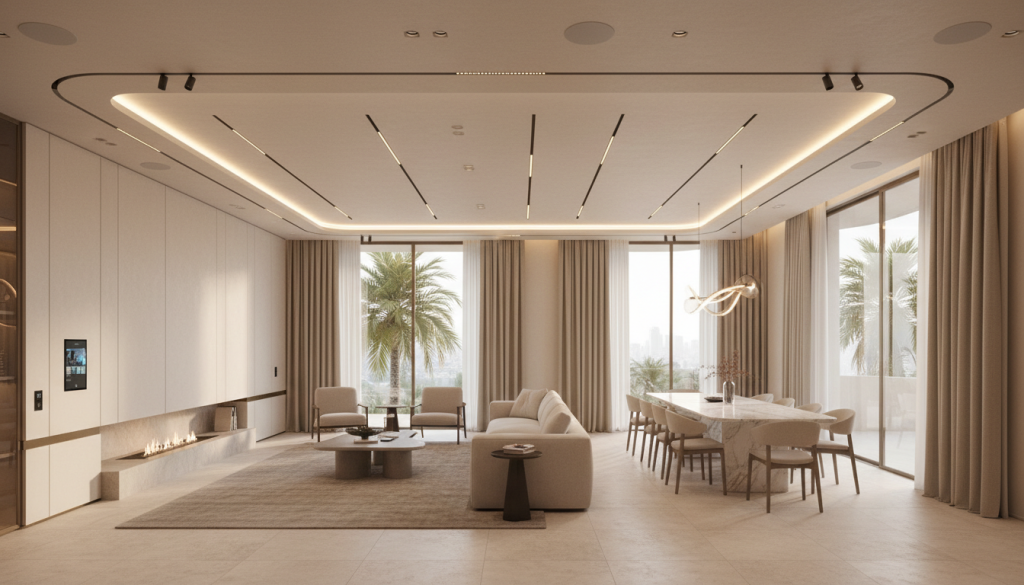
Interior design Lahore is no longer only about aesthetics, layouts, and finishes. It has become a layered discipline where architecture, technology, and human experience intersect.
Most homeowners do not realise this early on. They think smart home systems are an upgrade at the end of a project.
In reality, they now shape the entire design process.
In luxury interior design Lahore projects, smart integration is no longer optional. It is expected in high-end communities like:
- DHA
- Bahria Town
- Gulberg
- Model Town
- Johar Town
- MM Alam Road commercial hubs
Each location comes with its own lifestyle rhythm, and smart design adapts to that rhythm.
How smart technology is redefining interior design in Lahore
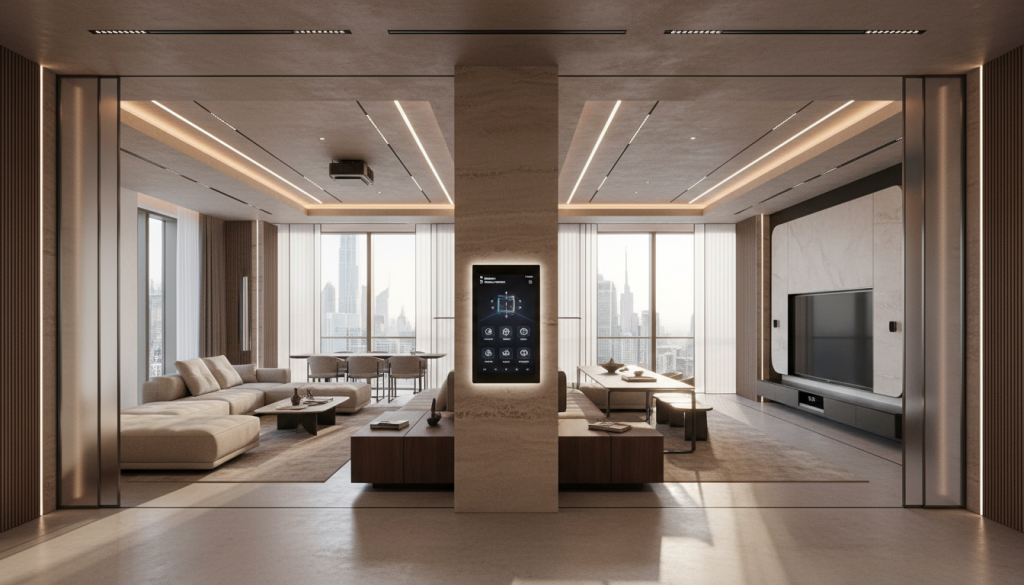
Smart Living Spaces: Homes Designed as Dynamic Systems
Traditionally, a living room was a living room. A bedroom was a bedroom. Now, each space is multi-functional and intelligent. We are designing homes where:
- Living rooms shift into cinema environments
- Dining areas transform into entertainment spaces
- Bedrooms adjust lighting for sleep cycles automatically
- Outdoor lounges respond to weather conditions
We have seen this happen in countless villa projects where clients want flexibility without visual clutter. A home in DHA, for example, may need to feel calm during the day, social in the evening, and completely private at night. Smart systems make that transition seamless.
Invisible Infrastructure in Modern Space Planning
In architecture and interior design Lahore projects, space planning is no longer only about furniture placement and circulation flow. It now includes hidden technical layers such as:
- Sensor placement for lighting and climate
- Concealed automation panels
- Acoustic zoning for open-plan layouts
- Integration points for smart glass and shading systems
In a recent villa interior design Lahore project in DHA, we had to redesign ceiling geometry three times just to ensure lighting scenes, speakers, and AC diffusers worked together without visual compromise. The result was not a more complex design. It was cleaner, quieter, and more refined.
Smart Lighting Design as Emotional Engineering
Lighting is where smart homes truly change interior design. It is no longer fixed. It is dynamic. Modern systems allow:
- Sunrise to sunset simulation indoors
- Scene-based moods for different activities
- Automated dimming based on natural light
- Focused lighting for work zones and soft lighting for relaxation
Imagine a Gulberg apartment where morning light feels energising, evenings feel warm and intimate, and entertainment lighting adapts instantly when guests arrive. That is not decoration. That is a controlled atmosphere.
Smart Materials for Technology-Integrated Interior Design
Most homeowners in Lahore do not realise this, but material selection now plays a technical role. In luxury interior design Lahore projects, we consider:
- Heat resistance due to Lahore’s extreme summer climate
- Reflectivity for lighting behaviour
- Signal compatibility for automation systems
- Hidden access for maintenance without disturbing finishes
For example, a stone wall in a Bahria Town villa is not just chosen for beauty. It must also allow embedded lighting strips and concealed wiring without affecting surface purity. This is where bespoke joinery and precision detailing become essential.
Smart home features shaping Lahore interiors today
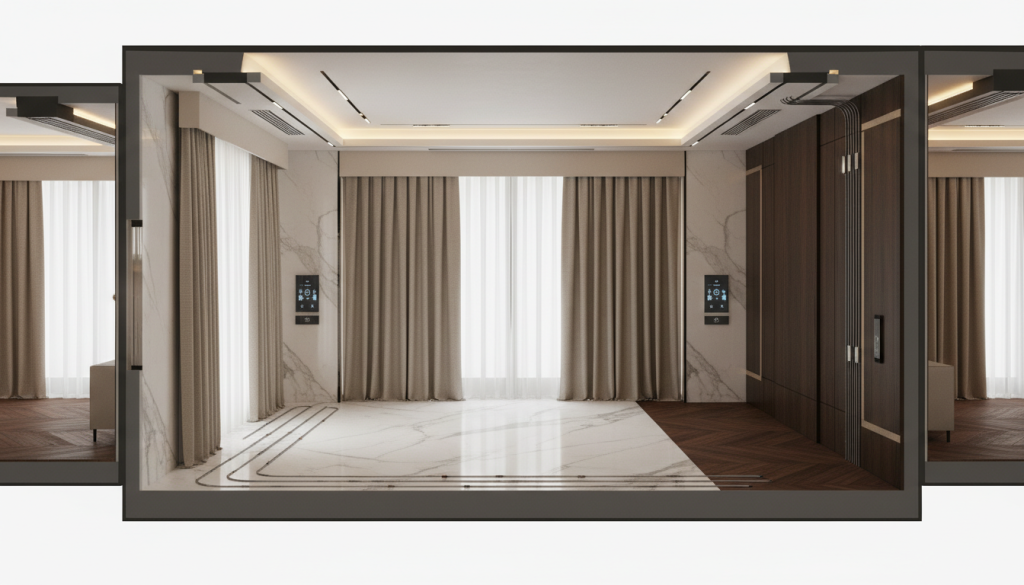
Here are the systems now commonly integrated into high-end homes and offices:
Lighting intelligence
- Automated daylight adjustment
- Pre-set emotional lighting scenes
- Motion-based corridor lighting
Climate control
- Zoned cooling per room
- Smart adaptation to Lahore’s summer heat and monsoon humidity
- Energy-efficient scheduling based on occupancy, which matters with rising electricity costs in Pakistan
Security integration
- Hidden surveillance systems
- Biometric or facial recognition access
- Remote monitoring for travel-heavy lifestyles
Entertainment systems
- Invisible speakers integrated into architecture
- Whole-home audio control
- Dedicated media rooms with automated environments
Smart shading
- Motorised curtains and blinds
- Solar-responsive glass systems
- Privacy control in bedrooms and bathrooms
Case study, villa transformation in DHA Lahore
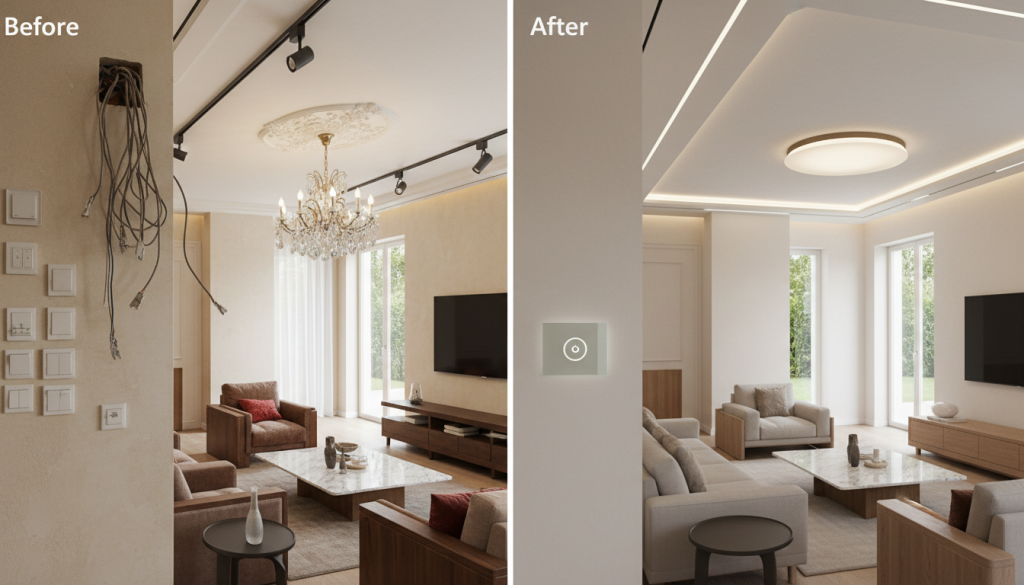
A family approached us for a villa renovation in DHA. The architecture was strong, the interiors were elegant, but the daily experience felt disjointed.
The challenge
- Separate systems for lighting, AC, and curtains
- No synchronisation between spaces
- Visible switches disrupting minimal design language
- Lack of consistency in lighting atmosphere
The approach
We rebuilt the design strategy from the ground up:
- Full integration of smart home systems during design stage
- Reworked ceiling plans for layered lighting and concealed tech
- Custom joinery to hide control systems completely
- Zoned climate control for different family routines
- Scene-based programming for daily living patterns
We used 3D design and visualisation before execution to ensure every detail was aligned with both aesthetics and functionality.
The result
The transformation was subtle but powerful.
The home did not look more technological. It felt more natural. Mornings became automatic. Evenings felt cinematic. Movement through the home became fluid and intuitive. The client described it simply as, “It finally feels like the house understands how we live.”
Common mistakes in Smart Home Design Lahore
We see the same issues repeated across Lahore projects.
1. Treating technology as an afterthought
This leads to exposed wiring, broken ceiling lines, and design compromises.
2. Overcomplicating systems
Too many controls create confusion instead of comfort.
3. Ignoring Lahore’s climate conditions
Summer heat, glare, monsoon humidity and winter smog must guide every design and technical decision.
4. Separating design from engineering
When interior design and technology are not planned together, neither reaches its full potential.
Why Lahore demands a design-led smart home approach
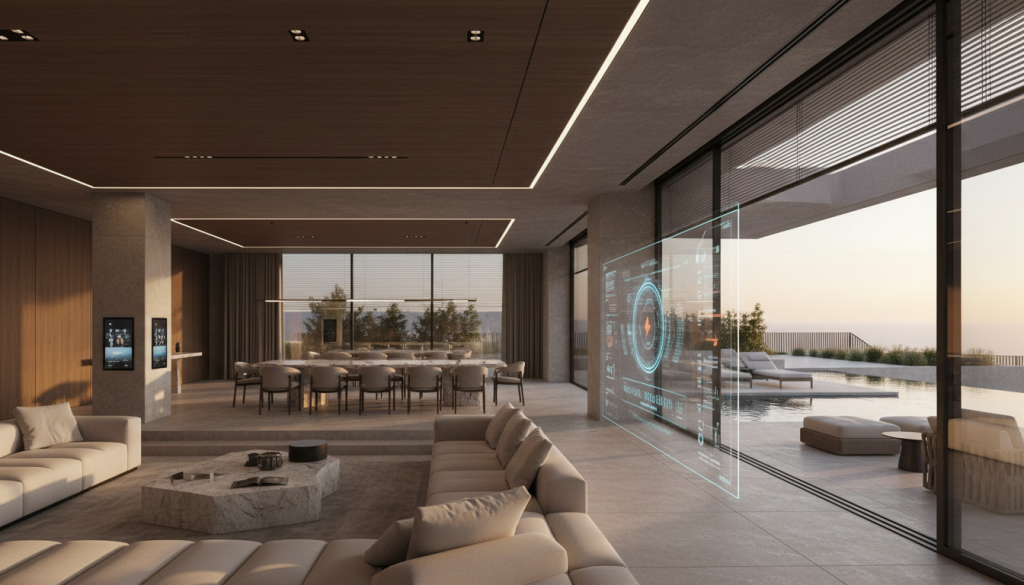
In premium communities like DHA, Bahria Town, and Gulberg, homes are lifestyle environments, not just properties. That is why successful projects always begin with design thinking, not devices.
A strong interior design Lahore process includes:
- Spatial planning and architectural flow
- Lighting and ambiance strategy
- Smart system mapping from concept stage
- Material and finish coordination
- Custom joinery and concealed integration
- Full fit-out execution planning
This is where full-service studios make a difference. Design, architecture, and build must work as one unified system.
We have worked on luxury homes across Lahore where success came from reducing complexity, not increasing it.
Office fit-out transformation on MM Alam Road

A corporate client on MM Alam Road wanted a workspace that felt minimal, but highly efficient.
The problem
- Multiple visible control systems
- Poor lighting zoning for focus and collaboration
- No flexibility in meeting spaces
The solution
- Centralised smart control system
- Adaptive lighting scenes for different work modes
- Smart glass partitions for privacy control
- Acoustic zoning for productivity
The result
A workspace that adjusts itself depending on how it is used. No distractions. No clutter. Just flow. This is the future of office fit-out Lahore design.
Frequently Asked Questions
How long does an interior design project take in Lahore?
Timelines vary depending on scale and complexity. Smart home integration requires early planning but improves overall execution quality.
Do I need a fit-out contractor or a design studio?
You need both, ideally integrated under a design and build approach to ensure consistency from concept to execution.
What is included in a design consultation?
It typically includes spatial review, concept direction, material guidance, and early-stage smart integration planning.
How do I choose the right interior designer in Lahore?
Look for proven experience in both aesthetics and technical integration, especially in luxury residential and commercial projects.
Start your transformation with a design-first approach
At our studio, we combine:
- Interior design services
- Architecture services
- 3D design and visualisation
- Full fit-out execution
- Custom joinery and bespoke solutions
Everything is designed together, not in isolation.
Book Your Design Consultation Today
Call Us to Discuss Your Project
Request a Custom Design Proposal
Final thought
A smart home is not about controlling everything from your phone. It is about walking into a space that already understands your rhythm, your habits, and your lifestyle.
A well-designed space is not just about how it looks. It is about how it feels every single day you walk into it.